

The Back to School Book We Want in Every Backpack: An Interview with Meredith Walker
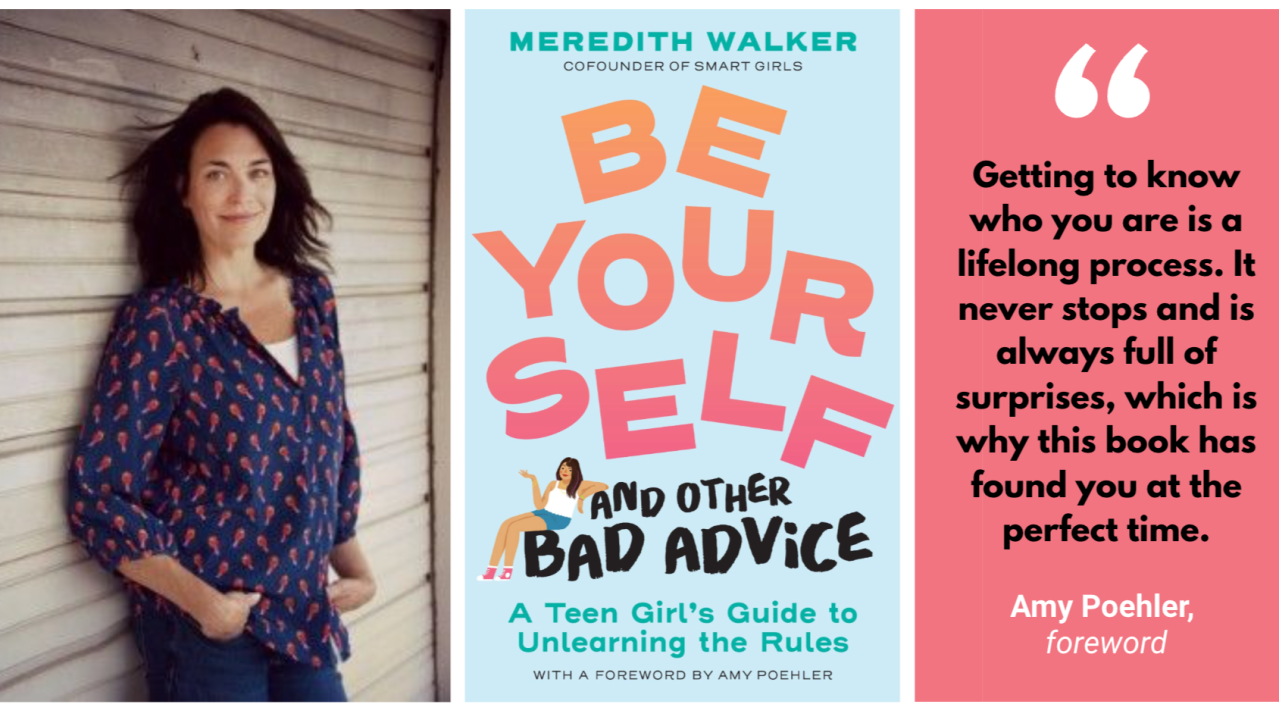
My new favorite book, and the one I want in every single backpack this fall, opens with these words:
“My first day at Saturday Night Live felt exactly like being the new kid at school: pretending I was calmer than I was, wondering who my friends would be, and trying to find out where the bathrooms were.”
The scene had me at the start – remembering day one of a first job, circling the same elevator bank multiple times and being wholly unable to find the cafeteria, much less knowing where to sit.
But the best part of this opening? Girls being handed the book by big sisters, wise moms and their absolute coolest aunts will recognize those same first-day jitters.
The search for new friends. Locating lockers, assemblies and their own authenticity.
Then they’ll flip the page and find the answers they need. Meet Be Yourself and Other Bad Advice and its creator, Meredith Walker.
A journalist who began her career at Nickelodeon’s Nick News, Meredith launched her role as next gen champion by traveling across the United States interviewing kids for new stories. By the time she moved to Saturday Night Live to run their talent department, she had met BFF Amy Poehler and the two of them co-founded the empowering online community, Amy Poehler's Smart Girls.
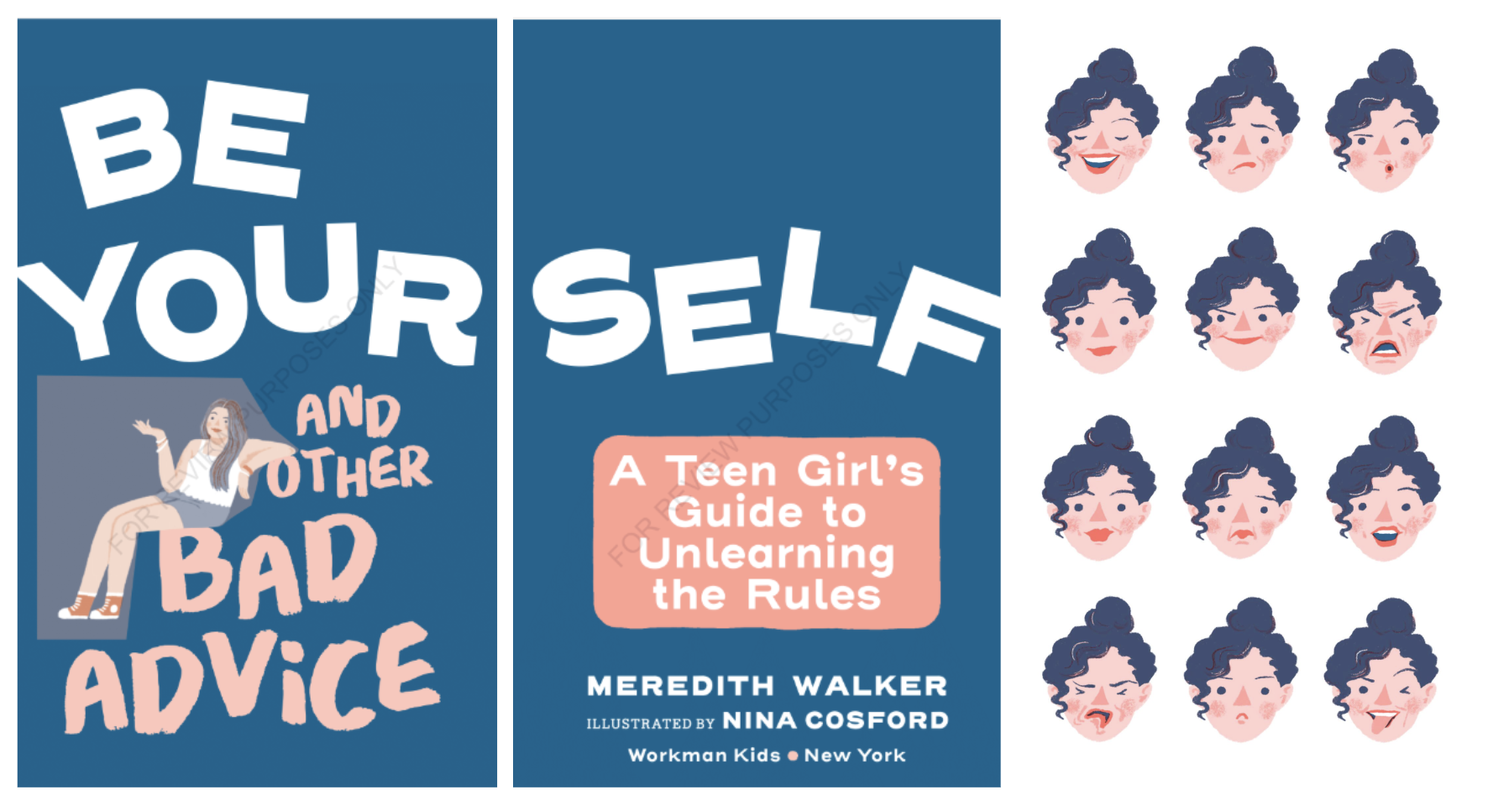
Dedicated to “helping young people cultivate their authentic selves,” I have always loved the Smart Girls platform, and given Être’s mission to help girls figure out who they want to be, the title of Meredith’s new book had me at the start. The foreword by Amy Poehler had me turning down the music in my headphones (and page corners), and illustrations by the talented Nina Cosford sparked a smile that wouldn’t stop.
If you take a peek at my recent conversation with Meredith, you'll be smiling too.
Keep reading to see why this is the book that should be in every backpack this fall and why Meredith Walker’s words will help navigate every tricky hallway that awaits.
(Edited for clarity and length)
IR: I’m so excited to get to chat about this book! As we were saying before we started - one of the things I love is the beginning of the book. You put yourself right at the start of the school year when you talk about walking into SNL for the first time. What made you kick it off like that? Because I think it makes it instantly relatable to every teen who's going to pick this up.
MW: Oh, I just love that you caught that because it seems like all of us, but especially young women, are always thinking about what's next. Like, when is my life starting and when will the big things happen? And I thought it was so interesting that here came this job that was such a dream come true, but we still have these feelings from adolescence. The leftover questions like do I belong, do I fit in, where will I find my friends don't end, and we can be confident and secure but still have those first-day feelings a million times over.
IR: Absolutely. And for any girl starting school right now – whether it’s walking into middle school, starting a new high school or meeting their college roommate - the prompts in the book help them dive right in to address questions that are top of mind. Was that part of the original idea – that they can skip around from chapter to chapter and find prompts they need at any point?
MW: Definitely. As an adult I still have times where I grapple with expectations or standards I have for myself. And while that happens no matter your age, I remember thinking years ago I just wish I had known better earlier. I wish I'd known to ask better questions of myself earlier, you know? When you're in the thick of adolescence, you're just trying to survive. You're trying to fit in, to belong. You're forming your identity, and you don't necessarily have all the space and time to get to the groove of self-examination.
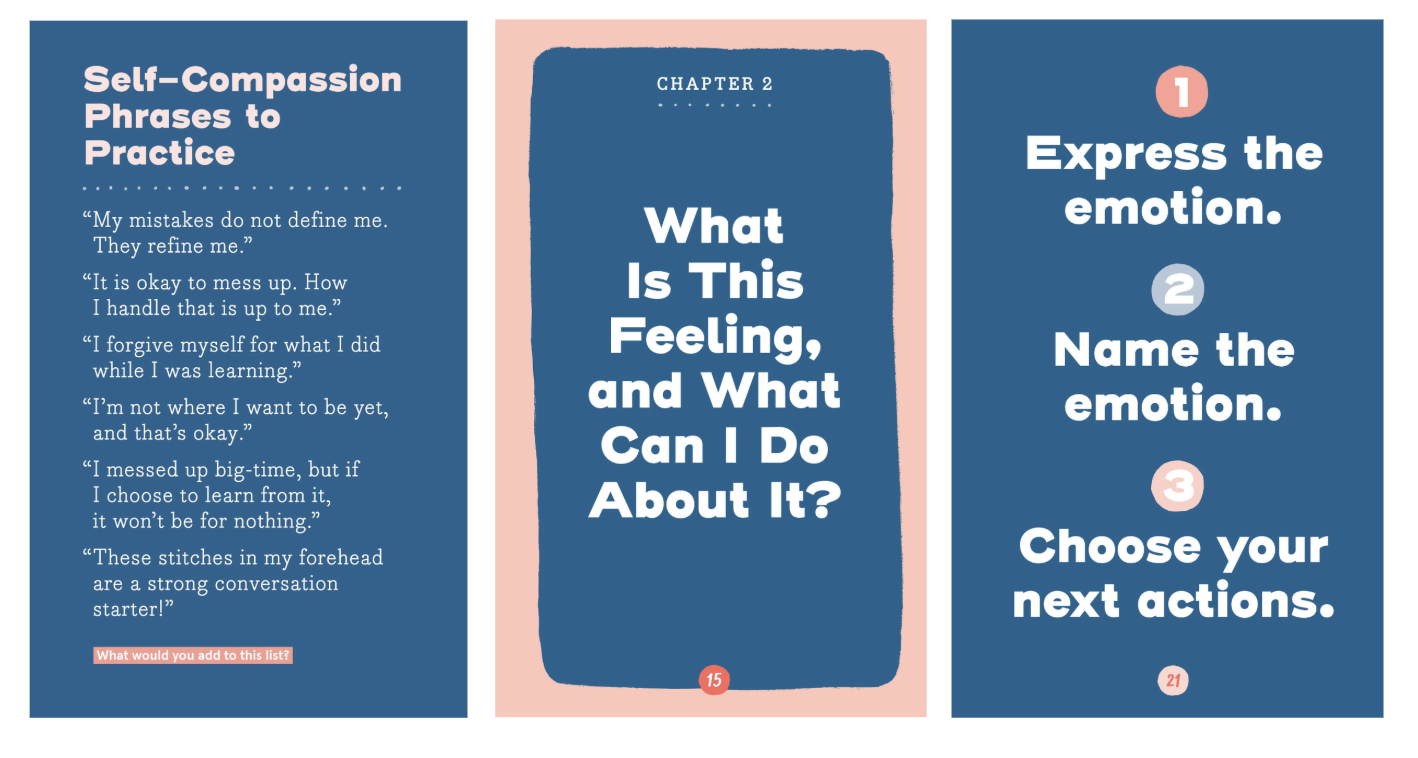
IR: Yes - and I think the prompts in this book totally help with that! You've got so many amazing nuggets of advice throughout this book; if you could pick one thing right now to tell yourself when you were in those teen years – one quote from this book or piece of mentor advice – what would it be?
MW: I think I would say two things. I really would - I'd have to make it two. The first thing I would say is, the biggest relationship of your entire life is with yourself. You're going to be with YOU every day for the rest of your life. So, make sure that that's someone you like, someone you're interested in, someone who you want to be around. I think building myself into an interesting person instead of thinking so much about outward stuff would have been really cool early on.
And then the other thing think is important is that somewhere along the way we kind of pick up on being super tough and mean to ourselves. I don't find that that very helpful, and I would have told myself very early on to talk to myself the way I talk to somebody I really love. Talk to the way I would talk to my best friend, or the way I would talk to my younger cousin. How would I help them? How would I encourage them after a mistake or when they were just feeling a little confused? I think talking to myself that way would have been a better way to go.
IR: Can we just put both of those on T-shirts? Our new fall mantras? Because the earlier we figure out these things, the better. Hearing that advice in high school is great, but middle school is even better, when friendships can be fragile and confusing. Staying with friendship, you talk in the book about the importance of friends. How has the wisdom of your friends impacted the advice you give in the book?
MW: I think the friendships and what we've talked about through the years definitely played into even the existence of this book! When women get together and bring up middle school, junior high or those early years of high school, there aren't a lot of people who are like, "Oh my God, I'd love to go back and do it again.”
IR: Literally, nobody.
MW: Right. And I’ve had so many discussions where everyone has a different story – maybe I was the mean one that time, or someone was mean to me that time, or I thought this was important when it really wasn't very important – and it’s all so relatable. We didn’t have a toolkit that helped us out that much back then, and we needed one. I've always found it fascinating that you could be in a group of professional women or at a college reunion, and if this subject comes up we can recall that 8th grade pit in our stomach instantly – that feeling, are they mad at me? Sharing those stories with friends really did lead me to think: we should write some of this stuff down. Write it down and get these Q&As happening earlier, so conversations are not quite as intense later.
IR: Tell us more about the conversations with girls you had before writing the book and what you hope it answers for them now?
MW: I feel like the book is a continuation of a conversation I’ve been having for years. With Smart Girls, my favorite part of all of it was spending time with girls and young women and really listening to them. When I would go out on the road and do school visits, workshops or speeches, that is where I got a lot of what's in this book. During so many Q&As high school girls would come up to me talking about how much pressure they felt - even if their parents were super chill. They just felt it from the atmosphere we're in.
But, and you know this is true too - when girls hear women like us talk about changing our minds, choosing the wrong major or finding a job didn’t fit, it hits differently. It can release the pressure they feel. - Meredith Walker
IR: Right - the freedom to transfer schools or change sports…
MW: Exactly. I took a year off. Or, I took a job I didn’t love because I couldn't find my dream job yet. Whatever it is, hearing from people like us saying stuff like that really matters to girls today. And the other thing I'll add to that is, and I think this is why what you do and what I do is important, the messenger really does make a difference. Sometimes your parents will say the smartest things or your teachers will say the coolest things. But the nature of those relationships can keep the information from resonating.
IR: One hundred percent. The ability for the next generation to feel seen and heard by someone they admire matters. Whether that's at a company they're visiting or a mentor they’ve asked to meet, they're going to hear that advice differently than if it's a parent. And I feel like your book makes them feel seen and heard, because you're anticipating the questions they're asking. You've heard these questions asked on the road, which lets readers think, "Yep, I was going to ask that, and now she's addressing it.” I feel like it's a whole new level of visibility, which I love.
MW: I really appreciate you saying that…I hope so.
IR: Okay, one last question about the book. We know girls are going to love it and share it with their friends. What's one thing you want the grownups - parents, the teachers, the big sister looking over their shoulders - to know?
MW: I'd love the grownups in the audience to know that girls are coming of age in this hyper intense environment, and while we all like to think that nothing's really changed since our day, it has. We didn't have social media. We didn't have what feels like wallpaper in our faces every moment with expectations about this is how you should look, and this is how you can improve so, you know, your elbows look right.
(laughter)
It's like everything is up for improvement, and because of that it's harder to have space and time to decide what you think about things. To form opinions, to gather evidence about things, and decide what you think and what you want out of life...the kind of person you want to be, because it's just this onslaught of opinions and expectations. And so, this book gives them a little space off-screen to do that.
IR: I couldn't have said it any better. Thank you.
It's true. And it's just the start.
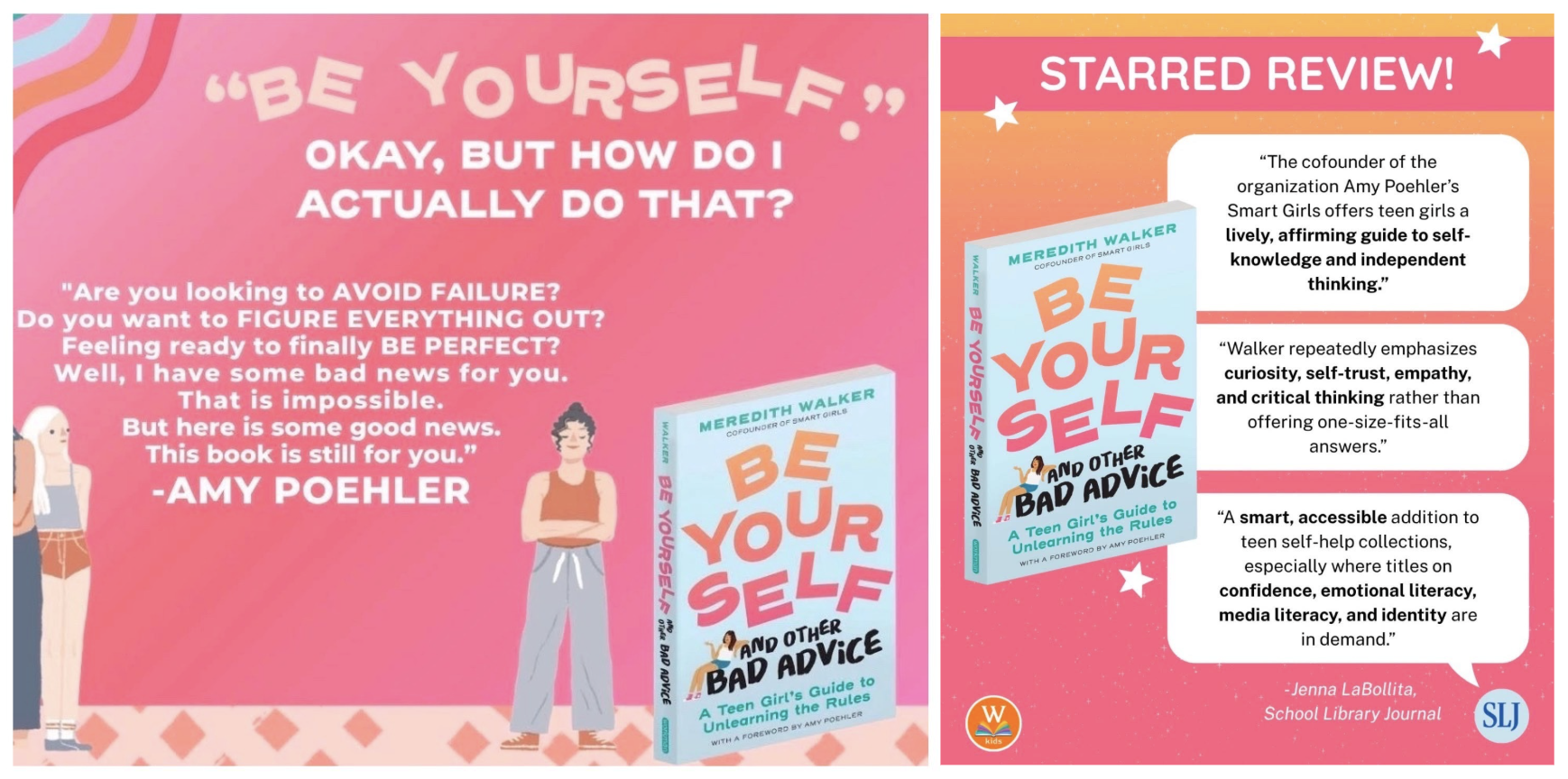
To learn more about Be Yourself and Other Bad Advice and to order your copy, head here.
Better yet…
Order multiple copies for friend groups, soccer teams and school libraries
Sneak books into backpacks, book clubs and holiday gift exchanges
Answer girls’ Qs before they get asked and provide a resource for long after they’ve finished reading
Because great books, like enduring friendships, sustain us when we find ourselves in unfamiliar hallways.
With deepest thanks to Meredith Walker for starting the convo – let’s continue it all fall by sharing her words...everywhere.
Looking forward,
Illana

ÊXTRAS: Three more ways to learn more about Be Yourself and Other Bad Advice you won’t want to miss: Hachette’s book page, the author’s Insta and the illustrator’s Insta! Keep following all for upcoming book events in your area...